October 3, 2026
How to Buy Used Omega Timepieces Safely
Buying a pre-owned Omega safely requires verification from a trusted source. Sanctum Timepieces authenticates every piece through in-house movement inspection before it reaches the collection. A polished appearance alone cannot confirm a watch’s history or movement integrity. Documentation and condition establish true value.
What makes buying used Omega watches risky?
Buying used Omega watches carries risks that extend far beyond surface appearance. Omega's history of precision and innovation, dating back to 1848 when Louis Brandt founded the company in La Chaux-de-Fonds, Switzerland, makes its pre-owned market attractive but also vulnerable to counterfeits and franken-watches. A polished appearance alone cannot establish a watch's history or confirm that its details match a collector's priorities. Collectors who overlook authentication expose themselves to movements with replaced components, refinished dials that destroy value, and cases over-polished beyond original specifications.
How do franken-watches enter the pre-owned Omega market?
Franken-watches combine authentic Omega parts with aftermarket or counterfeit components. A genuine case might house a swapped movement. An original dial could sit inside a replacement case. These hybrids pass casual inspection because sellers rely on visual appeal rather than mechanical verification. The result is a timepiece that looks correct but carries none of the integrity serious collectors demand.
What separates surface condition from authentic condition?
External polishing masks wear but reveals nothing about internal health. A bright case and clean crystal tell no story about service history, movement authenticity, or part originality. Sanctum Timepieces addresses this gap through in-house movement authentication, where the company's watchmaker inspects and authenticates every movement directly. No outsourced checklist replaces hands-on examination by trained specialists. The company's white-glove VIP concierge service handles each acquisition with discreet, personal attention from private sourcing through final delivery. This approach protects collectors from the financial loss of acquiring a watch that fails under scrutiny.
How do you verify a used Omega's authenticity?
Verifying a pre-owned Omega's authenticity requires examining the movement directly. Sanctum Timepieces authenticates every timepiece before it enters the collection, ensuring condition and provenance meet exacting standards. Collectors who skip this step risk acquiring a watch with undisclosed modifications or aftermarket parts.
A box and accompanying papers provide useful context. However, as noted in a buyer's guide from Affordable Swiss Watches Inc., these accessories do not replace a proper authentication process. Documents can be forged. Boxes can be sourced separately. The watch itself must tell the truth.
What does in-house movement authentication involve?
Sanctum Timepieces employs its own watchmaker to inspect and authenticate every movement. This is not an outsourced checklist. The company's watchmakers open each case, examine the caliber under magnification, and verify that every component matches factory specifications for the reference. Omega earned its reputation for extraordinary precision starting in 1848, when Louis Brandt founded the company in La Chaux-de-Fonds, Switzerland. Any deviation in amplitude, beat rate, or finishing signals a problem.
Why is movement inspection more reliable than checking serial numbers?
Serial numbers and external markings offer a starting point. They do not confirm what sits inside the case. A watch can carry a correct reference number and still house a swapped movement, aftermarket rotor, or non-original balance bridge. Movement inspection reveals these issues immediately. The horologist confirms the caliber number, bridge engravings, and shock system match the production period of the case.
This internal verification catches franken-watches that external checks miss.
The authentication process follows a clear sequence:
1. Case and reference verification: Confirm the model number, serial range, and case materials align with Omega's production records.
2. Movement inspection: Open the case back and examine the caliber, finishing, and component authenticity under magnification.
3. Performance testing: Measure amplitude, beat error, and rate accuracy against Omega's precision standards.
4. Bracelet and clasp examination: Verify end-link stamps, clasp codes, and bracelet construction match the reference.
Every piece Sanctum Timepieces offers completes this protocol before a client ever sees it. The company's white-glove concierge model means collectors receive authenticated used Omega watches with full confidence in their mechanical integrity. No shortcuts. No assumptions. Just a movement that runs exactly as Omega intended.
Which Omega references need extra scrutiny?
Certain Omega references attract counterfeiters and franken-watch builders more than others. The Speedmaster and Constellation lines demand the most careful inspection before any acquisition.
The used Omega watches market rewards collectors who verify details before committing. A polished case or attractive dial never proves a watch's history. Sanctum Timepieces authenticates every movement in-house before a piece enters the collection.
Why does the Speedmaster need deeper inspection?
The Speedmaster is one of the most iconic chronograph watches in the world. That status makes the reference a frequent target for counterfeiting. The Speedmaster market looks simple at first, but it quickly becomes complex once buyers start comparing models, references, and movements. Dealers observe this confusion daily.
1. Confirm the reference number against the movement and case details.
2. Inspect the chronograph function for smooth engagement and reset.
3. Verify the movement serial and caliber against factory records.
4. Check the dial, hands, and bezel for period-correct components.
What should collectors examine on a Constellation?
Design matters on the Constellation. Case size, bracelet style, and dial all affect how the watch looks and wears. Condition, authenticity, and warranty terms matter just as much. A box or papers provide useful context, but they do not replace a proper authentication process.
Sanctum Timepieces curates an exclusive collection from renowned brands, including Omega. Each piece undergoes verification for authenticity and condition before reaching the collection. Clients receive a private consultation tailored to their horological priorities.
What should you check in a private consultation?
A private consultation reveals far more than a listing page ever could. Sanctum Timepieces structures every appointment around a detailed consultation process that matches the right watch to the right person, not the other way around.
Every acquisition begins with a conversation, not a transaction. The company’s watchmaker walks clients through movement authentication, case condition, and provenance before any commitment materializes. Skipping this step leaves collectors exposed to undisclosed polishing, replacement parts, or mismatched documentation that erode long-term value.
What questions should a collector ask during the consultation?
Three questions separate a thorough evaluation from a superficial one. First, request the watch’s full service history and any replacement components. Second, ask to see the movement under magnification while the horologist explains what to look for. Third, confirm whether the bracelet links, box, and papers are original to that specific reference.
How does Sanctum Timepieces verify authenticity differently?
Sanctum Timepieces performs in-house movement authentication rather than relying on outsourced checklists. Every caliber is opened, inspected, and verified by the company’s own specialists. This internal standard catches issues that third-party grading often misses, including subtle refinishing or non-original bridges that compromise a watch’s integrity.
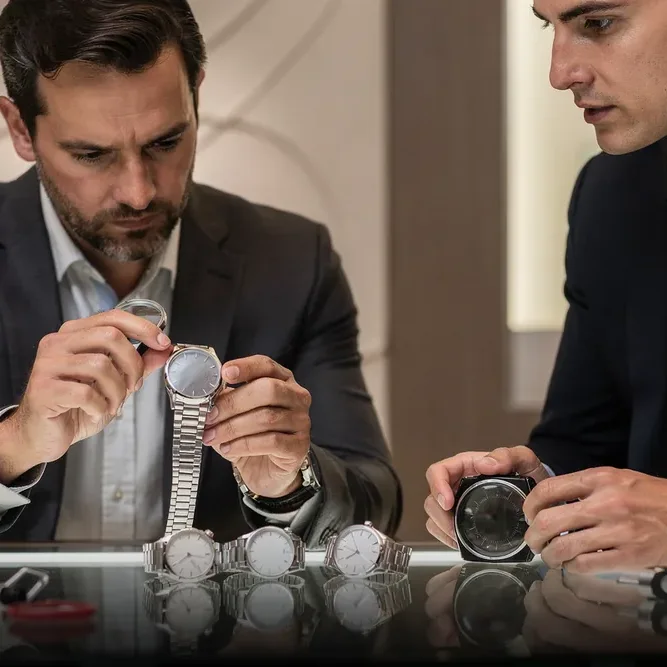
The consultation also establishes fit and wearability. Case size, bracelet taper, and lug geometry affect how a used Omega watch sits on the wrist, and no photograph captures that relationship. Clients handle multiple references side by side, comparing how each wears before narrowing the field.
Seasoned collectors and first-time buyers receive the same personal attention and honest expertise. Sanctum Timepieces serves clients in Southern California and beyond strictly by private appointment, ensuring discretion throughout the process. A transparent luxury watch buying process demands this level of access. Without it, buyers forfeit the clarity that only a hands-on, expert-guided evaluation provides.
How do you avoid gray-market pitfalls?
Gray-market Omega watches carry no manufacturer warranty and often arrive with undisclosed repair histories. A timepiece purchased outside authorized channels risks compromised movements, aftermarket parts, and zero recourse when problems surface. Collectors lose thousands on watches that cannot be serviced by Omega.
Sanctum Timepieces eliminates these risks through a structured acquisition process. The company sources rare pre-owned luxury watches and offers a private, tailored experience beyond the typical waitlist. Every piece undergoes authentication and curation before entering the collection. The in-house watchmaker inspects each movement directly, a standard that gray-market sellers never match.
What makes a gray-market Omega different from certified pre-owned?
Gray-market watches are genuine products sold through unauthorized dealers. The manufacturer voids the warranty immediately. Certified pre-owned pieces, by contrast, pass through rigorous inspection and carry backing from the seller. Sanctum Timepieces authenticates and curates an exclusive collection of timepieces, ensuring each watch meets exacting condition standards before any client sees it.
How does private sourcing protect against franken-watches?
Franken-watches combine authentic and counterfeit components, often undetectable in online photos. Private, appointment-based sourcing allows thorough physical examination. Built on a foundation of trust and passion for horology, Sanctum Timepieces values the art and craftsmanship of each watch. The company hosts weekly live auctions on the Grailzee platform, inviting both seasoned collectors and new entrants to participate with full transparency.
A disciplined approach to pre-owned acquisition follows four steps:
1. Verify the seller's authentication process. Request details about movement inspection and parts verification before committing funds.
2. Demand service history documentation. Any gap in records signals potential gray-market origins or undisclosed repairs.
3. Confirm warranty terms in writing. Gray-market watches carry no factory coverage; reputable dealers provide their own guarantees.
4. Inspect the watch in person or through a trusted intermediary. Photographs conceal replaced dials, polished cases, and non-original bracelets.
Collectors seeking used Omega watches benefit from relationships with established dealers. Omegaforums.net members consistently recommend trusted sources with long track records, noting that Seamaster and Speedmaster models remain the safest entry points for new buyers. A vetted dealer provides authentication that no online marketplace listing can replicate. Without that verification, the buyer shoulders every risk alone.
Conclusion
A disciplined approach to pre-owned Omega acquisition demands verification of the seller’s authentication process, service history documentation, written warranty terms, and in-person inspection.
Collectors who skip these steps shoulder every risk alone. A vetted dealer provides authentication that no online marketplace listing can replicate, making the relationship the buyer’s strongest safeguard against gray-market pitfalls and franken-watches.
Have a piece in mind, or looking to sell one?