October 6, 2026
Luxury Timepiece Authentication: Cost and Process
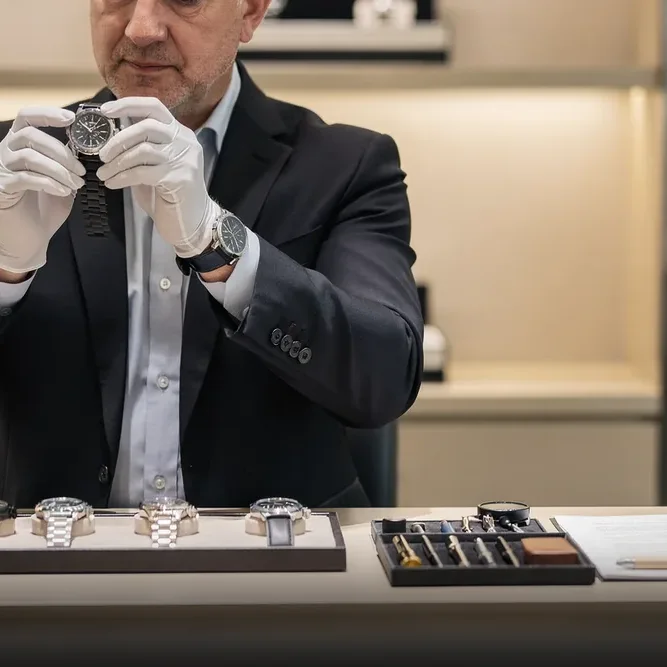
Professional luxury watch authentication requires a thorough inspection by certified horologists, with comprehensive services including case finishing examination, movement verification, and provenance documentation. Sanctum Timepieces performs in-house movement authentication by a certified watchmaker, examining every detail from brushed-to-polished surface transitions to mechanical integrity before any timepiece reaches the collection.
What Does Luxury Watch Authentication Cost?
Luxury watch authentication cost varies by the piece's complexity, brand, and the depth of inspection required. Collectors should expect a private consultation to determine the exact fee rather than a fixed public price.
Modern counterfeits are precision-engineered deceptions designed to bypass casual observers and deceive even seasoned enthusiasts. The stakes are concrete: one in three used Rolex watches on the secondary market fails professional authenticity checks, according to Luxury watch authentication: a collector's guide (2026). A collector who skips verification risks absorbing a total loss on a superclone indistinguishable from genuine to the naked eye.
What Factors Influence the Cost of Authentication?
The luxury watch authentication cost and process depend on several variables that shift from piece to piece. No single fee covers every timepiece because inspection depth scales with the watch's mechanical complexity and market risk profile.
1. Schedule a private consultation. The company tailors every engagement to the specific reference, its complications, and its provenance. Pricing emerges from that conversation, not from a menu.
2. Submit the timepiece for in-house movement inspection. Sanctum Timepieces employs its own watchmaker who disassembles and verifies every movement. This in-house movement authentication step adds cost but eliminates the risk of an outsourced checklist missing a sophisticated fake.
3. Receive a comprehensive condition and authenticity report. The final deliverable includes documentation of case finishing, dial application, and mechanical integrity. The fee reflects the labor hours and expertise required for that specific reference.
Is Authentication Included When Buying from a Dealer?
Authentication is built into the acquisition experience at Sanctum Timepieces rather than sold as a standalone add-on. The company's white-glove VIP service handles every acquisition with personal attention, meaning the verification cost is absorbed into the curated transaction. A collector who purchases a pre-owned piece through this channel receives authenticated inventory without a separate line-item charge. For watches sourced elsewhere, the consultation determines a bespoke fee based on the work required to certify that specific timepiece.
What Happens During a Professional Authentication?
Professional authentication transforms an uncertain acquisition into a verified asset. The process combines advanced horological examination with a white-glove concierge approach that prioritizes discretion and precision. Collectors who bypass this step risk acquiring sophisticated counterfeits that now mimic genuine timepieces with startling accuracy. The counterfeit watch trade costs the Swiss watch industry significant annual revenue, according to Luxury of Watches.
Sanctum Timepieces structures every authentication around a private, tailored consultation. The company matches the right watch to the right collector before any transaction proceeds. This relationship-first model ensures each acquisition aligns with the client's horological aspirations and investment goals.
What does the initial consultation involve?
The authentication journey begins with a detailed discussion of the collector's preferences and objectives. Sanctum Timepieces sources rare pre-owned luxury watches through a private, by-appointment experience that extends beyond typical waitlist constraints. Every piece the company carries has been personally inspected and authenticated before it reaches the collection.
How do examiners verify case finishing?
Examiners scrutinize case finishing transitions under raking light. Luxury watches combine brushed and polished surfaces with a razor-sharp boundary between them. This transition must appear as a perfect line, never blurred, rounded, or inconsistent. Counterfeit cases almost always reveal compromised machining at these critical junctions.
What reveals a genuine dial under magnification?
Genuine applied indices serve as definitive authenticity markers. These individually placed metal components stand perpendicular to the dial with uniform height under 10x magnification. Printed indices on counterfeit dials lack the dimensional precision and clean edges that characterize authentic manufacture. The examination leaves no detail unverified before a timepiece enters Sanctum Timepieces' curated inventory.
Why Is In-House Movement Authentication Critical?
Movement authentication separates a secure acquisition from a costly counterfeit. High-grade fakes now use precision CNC equipment and cloned movements, making surface-level checks dangerously unreliable. A collector who skips this step risks financial loss, legal complications, and permanent market devaluation. Independent verification protects buyers from these outcomes.
What makes modern counterfeits so difficult to detect?
Counterfeiters deploy precision CNC machining and source genuine movements. These super-clones replicate weight, aesthetics, and mechanical function with startling accuracy. Visual inspection alone no longer suffices. Only a movement-level teardown reveals the truth.
Sanctum Timepieces addresses this threat through a rigorous in-house protocol. The company's own watchmaker inspects and authenticates every movement. No outsourced checklist replaces direct, hands-on examination. This approach forms a core pillar of the Sanctum Timepieces service, ensuring each piece's authenticity and condition before it reaches the collection.
How does in-house authentication differ from outsourced verification?
Outsourced verification relies on third-party checklists and variable standards. In-house authentication places the responsibility directly on an employed watchmaker who knows the brand's curation criteria. These specialists disassemble movements, examine finishing under magnification, and verify every component against factory specifications. The process catches discrepancies that generic inspections miss.
The procedure follows a strict sequence:
1. Case opening and initial inspection. The watchmaker removes the caseback in a dust-controlled environment and documents the movement's visible condition.
2. Component-level verification. Each bridge, screw, and jewel is examined for correct finishing, engraving depth, and material composition.
3. Timing and amplitude testing. The movement runs on a timegrapher in multiple positions to confirm it meets manufacturer tolerances.
4. Authentication report generation. Findings are compiled into a detailed record that accompanies the timepiece through acquisition and delivery.
This white-glove standard eliminates the gaps that counterfeiters exploit. A collector receives not just a watch, but documented proof of mechanical integrity.
How Do You Verify Provenance and Documentation?
Provenance verification separates a genuine heirloom from a sophisticated counterfeit. Authenticity checks involve detailed analysis of components, documentation, and provenance. A watch with missing paperwork or a "naked" status warrants extra scrutiny in the authentication process.
What Documents Should Accompany a Pre-Owned Luxury Watch?
Original sales receipts, warranty certificates, and service records form the documentary backbone of a timepiece's history. These papers trace ownership lineage and confirm the watch's journey from manufacture to the current transaction. Gaps in this paper trail do not automatically disqualify a piece, but they demand deeper investigation.
How Does Sanctum Timepieces Validate a Watch's History?
Sanctum Timepieces specializes exclusively in pre-owned timepieces, believing that a watch with a story is a watch with soul. The company's in-house watchmaker cross-references serial numbers against manufacturer databases and historical archives. This process confirms that the movement, case, and dial align with the reference's original production specifications. The team works with collectors across Southern California and beyond, in person by private appointment or remotely for sourcing and selling.
A thorough provenance check follows a structured sequence:
1. Examine the physical documents. Inspect paper quality, printing techniques, and font consistency against known originals from the era.
2. Cross-reference serial and reference numbers. Verify that the numbers on the watch match those on the papers and fall within the correct production range.
3. Trace the service history. Contact authorized service centers to confirm recorded maintenance, which validates the watch's life story.
4. Assess the "box and papers" context. Understand that what box and papers really tell you extends beyond simple inclusion to questions of authenticity and originality.
A naked watch, one sold without any accessories, is not inherently problematic. Its value and verifiability, however, rest entirely on the physical authentication of the watch itself. The luxury watch authentication cost and process reflect this added labor. Without documents, the mechanical and aesthetic inspection must carry the full burden of proof, a task requiring advanced horological expertise and specialized equipment.
What Mistakes Should Collectors Avoid?
Collectors lose money when authentication becomes an afterthought. The most damaging errors happen before a single dollar changes hands.
1. Skipping professional verification. A cursory glance fails every serious collector. The distinction between a genuine masterpiece and a sophisticated superclone exists within microns, as Luxury Time NYC documents in its connoisseur's guide. No collector should trust eyesight alone.
1. Chasing transactions over relationships. Sanctum Timepieces is built on a foundation of trust and passion for horology. Collectors who prioritize quick sales over genuine client relations forfeit the guidance that protects long-term portfolios. The company's goal is simple: work closely with each client and build a genuine relationship toward collecting goals.
1. Neglecting technical safeguards. Professional pressure testing and detailed technical verification are essential safeguards for investment. Skipping these steps leaves a collector exposed to mechanical failures that surface only after acquisition.
Why does a quick visual check fail against modern counterfeits?
Modern superclones replicate weight, finishing, and even movement architecture with startling precision. The genuine article and the deception differ within microns. Only magnification, raking light, and trained horological inspection reveal the truth.
What should a collector demand before committing to a purchase?
A collector should demand documented movement authentication and pressure testing. Sanctum Timepieces performs in-house movement authentication on every piece before it reaches the collection. Understanding watch reference numbers provides a research starting point, but never replaces physical verification.
The collector who treats authentication as a formality inherits risk. The collector who treats it as a prerequisite builds a portfolio with confidence.
Conclusion
The collector who demands documented movement authentication and pressure testing before every acquisition builds a portfolio on certainty rather than hope. This standard transforms a transaction into a lasting asset, one verified by a trained watchmaker who examines every component under magnification. Treat authentication as the prerequisite it is, and each addition to your collection arrives with documented proof of mechanical integrity.
Have a piece in mind, or looking to sell one?