September 27, 2026
What Happens When You Ask Sanctum to Source a Specific Watch Reference
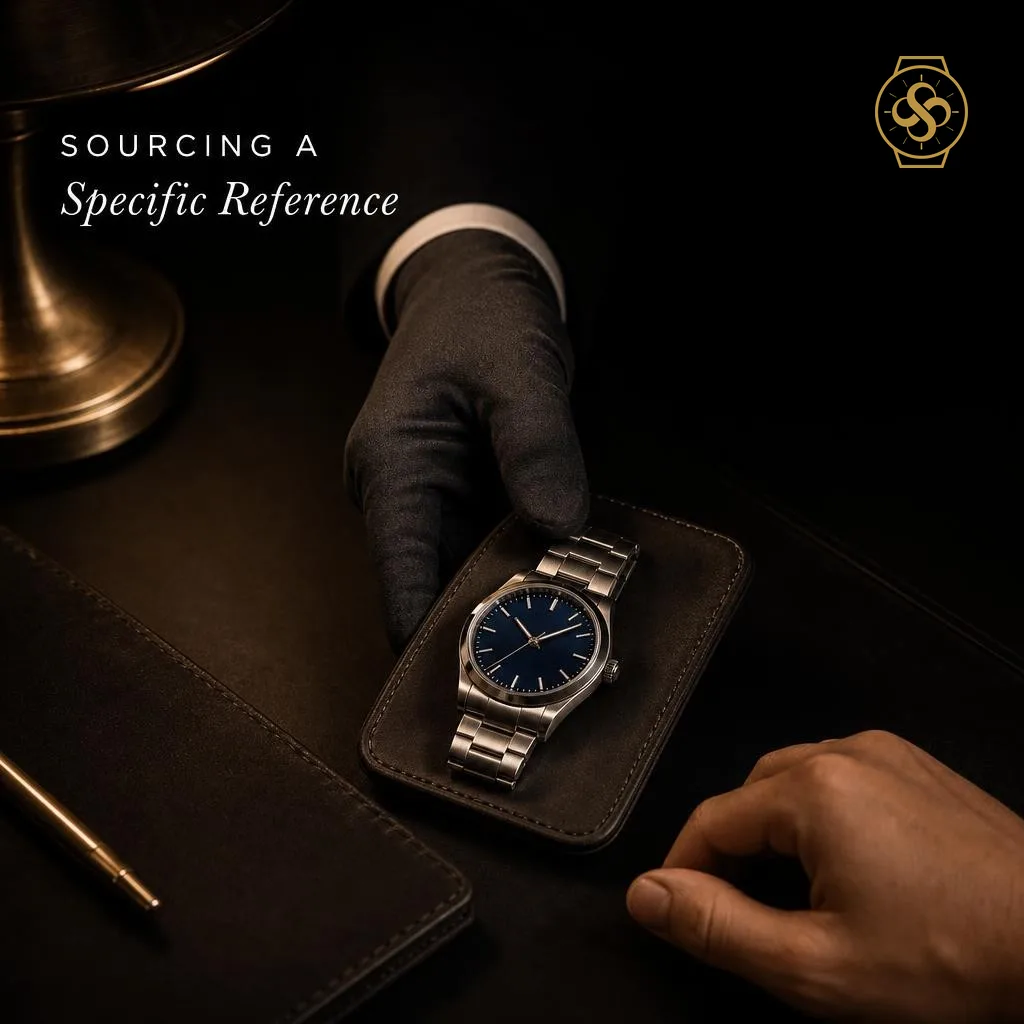
Asking for a specific watch reference begins a conversation and a search. It does not mean the watch is already in hand, that a suitable example is available, or that the search will succeed.
That distinction matters before you make plans around a purchase. A sourcing request gives a dealer something specific to look for, but the reference alone may not describe everything you would accept.
At Sanctum Timepieces, the starting point is transparency about that difference. Here is how to think about the conversation, what information helps define your request, and what deserves clarification before you make a decision.
What a sourcing request means at Sanctum
Sanctum Timepieces is a private dealership operating in the secondary market for modern Swiss timepieces. California-based Albert Navarro works with high-net-worth individuals, business owners, and collectors navigating milestone purchases.
Sanctum's stated approach is to explain how sourcing works, who it is working with, and the real market conditions. It does not pretend to hold inventory it does not have or manufacture scarcity to push a decision.
For a buyer, the important distinction is between a watch you have asked someone to find and a watch whose status has been clearly established. Treating those as separate matters helps keep the conversation grounded.
The brand's network spans seven countries and over 1,000 dealers. That describes the breadth of its relationships; it does not establish whether your requested watch is available or whether an acceptable example can be found.
A sourcing request should therefore leave room for an honest answer, including uncertainty. Having a clear target does not remove the need to establish what is actually possible.
Start with the reference, then define the purchase
The reference identifies your target. Your requirements define the purchase you would be comfortable making.
Before sending an inquiry, it helps to separate what you need from what you would prefer. The following are general considerations for a sourcing conversation, rather than a description of a fixed Sanctum procedure.
1. Identify exactly what you want
Include the reference number if you know it, along with any configuration details that matter to you. If you are working from a photograph or listing and are unsure of the reference, say so.
There is no benefit in making your request sound more certain than it is. "This is the watch I mean, but I need help confirming the reference" gives the conversation a clear starting point.
Keep the original target distinct from possible alternatives. If you would consider another reference, describe that as a separate option so your interest does not become assumed permission to substitute.
2. Describe what you would accept
Think through your expectations for condition, accompanying items, and any other attributes that would affect your decision.
A broad phrase such as "a good example" leaves room for interpretation. Describe the details that matter to you and ask for clarification where you do not know how to express them.
You do not need to arrive with specialist vocabulary. Plain language about what you want to receive is more useful than terminology you are unsure about.
3. State your budget and timing honestly
Give a budget you are comfortable with. If it is a firm ceiling, make that clear and ask what any quoted amount includes before treating it as the complete cost of a purchase.
If the watch is for a milestone or a particular date, mention that too. A deadline is useful context, but it should not become an assumed delivery commitment.
Your requested timing and any timing the dealer can support need separate confirmation. Keep that distinction visible throughout the conversation.
Understand what the network does and does not tell you
A large dealer network can sound like an answer to the availability question. For your purchase, the relevant issue remains much narrower: whether a suitable example of your requested reference can be identified and its status explained.
Network size alone cannot answer that.
Sanctum's seven-country network is part of its sourcing context. It should not be read as a catalogue of watches in hand, a promise of priority, or assurance that a particular request will produce a result.
When discussing a search, ask for clarity about the watch under consideration and what is known about it. Avoid filling in missing information simply because the dealer has broad relationships.
It is reasonable to want a direct answer. It is equally important to leave space for "that has not been established yet."
Keep the search separate from the decision to buy
A useful way to follow a sourcing conversation is to distinguish three questions: what am I asking the dealer to find (your reference and the requirements attached to it); what has been established about any proposed watch (the specific example under discussion, rather than the original request); and what information do I still need before deciding (where unanswered questions belong).
These are checkpoints for the buyer, not a claim about Sanctum's internal workflow. Their purpose is to prevent an inquiry from feeling further along than the available information supports.
A discussion about a possible watch should not require you to assume that every detail is settled. Ask the dealer to distinguish what is confirmed from what still needs clarification.
That includes whether the watch is in hand. Sanctum's commitment to avoiding false inventory claims makes this distinction central to its stated approach.
Assess any proposed watch against your original request
If a watch comes under consideration, return to the requirements you set at the beginning. Interest in the reference should not make the details of the particular example disappear.
As general buying guidance, keep these areas separate during your review: identity (enough information to establish which reference and configuration you are considering); condition (a clear description and clarification of anything you do not understand); accompanying items (exactly what the proposed purchase includes); authenticity (how the dealer supports its statements and what remains unconfirmed); price and terms (the amount, what it covers, and any proposed terms); and timing (distinguishing an estimate or expectation from a commitment).
This list does not describe checks Sanctum has performed or promise a particular result. It gives you a practical way to identify the questions that need answers for your purchase.
Keep the questions specific to the watch under discussion. A general statement about a brand, reference, or dealer relationship should not replace information about that example.
Decide where you are willing to be flexible
If the conversation does not establish a suitable option, you can revisit the request without abandoning your standards.
Start with the distinction between a preference and a requirement. You may be comfortable reconsidering one detail while holding firm on another, or you may prefer to leave the request unchanged.
For example, if your deadline is flexible but your reference choice is fixed, say that plainly. If your budget is fixed, avoid language that suggests you are inviting options beyond it.
Flexibility should be deliberate. You can ask about alternatives without agreeing that an alternative meets the original brief.
There is also room to pause. A search creates no reason to treat an unresolved question as an acceptable answer.
What to include in your first inquiry
You do not need a long message to begin. A clear request can cover the essentials: the reference you're interested in sourcing, your required details and where you're flexible, your budget and whether it's a firm ceiling or open to discussion, your preferred timing, and any questions you'd like clarified up front.
Leave uncertain details open rather than guessing. The purpose of the first message is to start an informed conversation, not to demonstrate that you already know the market.
When contacting Sanctum Timepieces, bring the reference, your boundaries, and your questions. Ask what is known, what remains uncertain, and what would need to be clarified before you decide.
Have a piece in mind, or looking to sell one?