October 21, 2026
Why Are Patek Philippe Watches So Expensive?
Patek Philippe’s expense stems from generations of hand-finishing, proprietary complications, and extreme production scarcity. The brand’s Henry Graves Supercomplication pocket watch set a record at $23.98 million. Every movement undergoes rigorous in-house authentication, ensuring each timepiece represents centuries of horological mastery rather than mere luxury.
What makes Patek Philippe watches so expensive?
Patek Philippe commands extraordinary prices through a deliberate fusion of four elements. Unmatched craftsmanship, restricted production, historical renown, and cutting-edge technology combine to create timepieces that routinely set auction records. Collectors who overlook these fundamentals risk misjudging a watch whose value compounds over generations.
The company's heritage stretches back to 1839, embedding nearly two centuries of horological authority into every reference. This uninterrupted lineage shapes both pricing and lasting legacy. A Patek Philippe does not merely tell time. It carries the weight of continuous innovation secured across generations of independent family stewardship.
Why does Patek Philippe limit production numbers?
Scarcity is engineered, not accidental. The manufacture deliberately restricts output to preserve exclusivity and maintain obsessive quality control. Each component receives attention that mass production simply cannot replicate. Fewer watches leave the atelier each year than demand requires, which sustains upward pressure on both retail allocations and secondary-market valuations.
How does handcrafting affect the final cost?
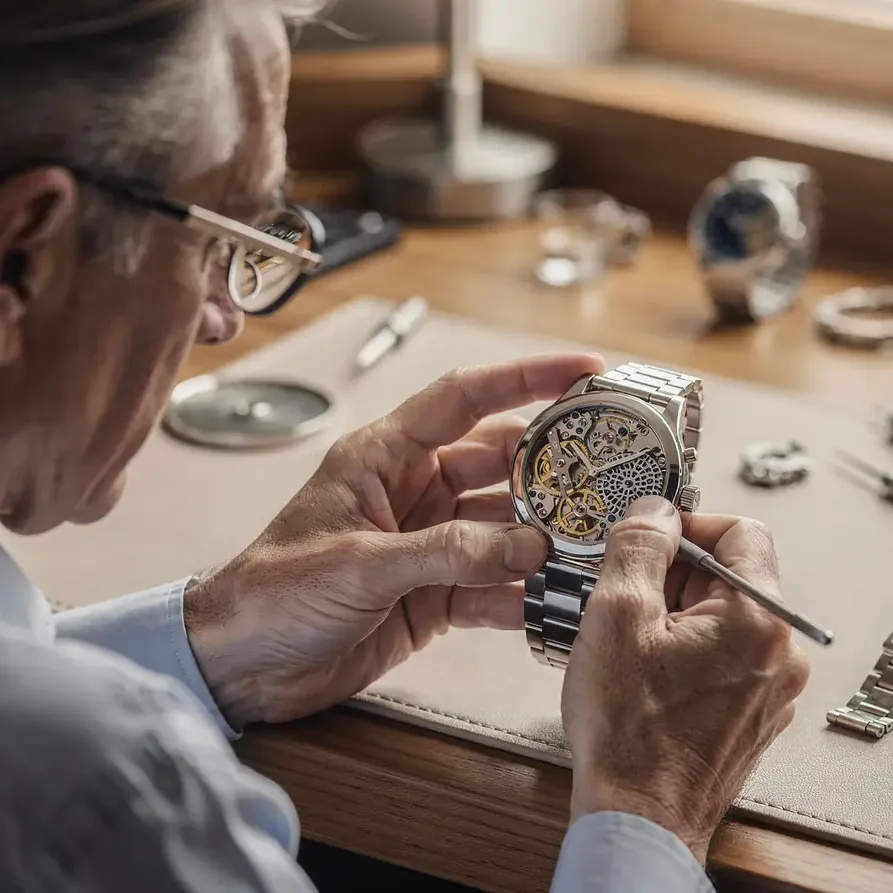
A single Patek Philippe movement can demand months of hand-finishing before assembly. Artisans bevel, polish, and decorate components to standards invisible to the naked eye. This labor-intensive process multiplies production hours far beyond industry norms. The result is a mechanical object finished like heirloom jewelry, a distinction that separates six-figure references from merely expensive alternatives.
Why are Patek Philippe watches so expensive becomes clear when examining the secondary market. Pre-owned examples frequently trade above original retail, a phenomenon few luxury goods sustain. Sanctum Timepieces authenticates and curates these rare references, verifying condition and provenance before any piece reaches a collector. That authentication layer matters because counterfeits grow more sophisticated each year. A documented, movement-inspected Patek Philippe preserves the very qualities that justify its cost.
How does hand-finishing drive up the cost?
Hand-finishing transforms a functional movement into a mechanical sculpture. Patek Philippe’s Genevan craftsmanship demands that every component, even those invisible beneath bridges, receives meticulous hand-polishing and beveling. This labor-intensive process stands at the pinnacle of the luxury timepiece market, where commanding prices reflect hundreds of hours of artisan work per caliber.
What specific hand-finishing techniques add the most value?
Anglage, or hand-beveling, requires a master craftsman to file perfect 45-degree edges on every bridge and plate. Black polishing eliminates surface imperfections until steel components reflect light as a flawless mirror. Côtes de Genève striping and perlage dotting add decorative precision. Each technique demands years of training to execute correctly.
Why does hand-finishing matter for pre-owned value?
A hand-finished movement signals authenticity and care that machine finishing cannot replicate. Collectors lose confidence when movements lack these hallmarks. Sanctum Timepieces addresses this directly through in-house movement authentication, where the company’s own watchmaker inspects and authenticates every movement. This hands-on verification mirrors the watchmaking itself, ensuring each acquisition reflects the original artisan’s intent. The white-glove VIP concierge service handles every step with discreet, personal attention, from private sourcing to final delivery.
Why does scarcity affect Patek Philippe value?
Patek Philippe deliberately limits annual production to a fraction of global demand. This calculated restraint transforms each reference into a finite asset the moment it leaves the Geneva manufacture. Collectors who hesitate face a secondary market where availability shrinks year after year, and prices climb accordingly.
The financial stakes are concrete. A Patek Philippe Henry Graves Supercomplication pocket watch reached $23.98 million at auction, while the Patek Philippe 1518 in stainless steel sold for $11 million. These record-setting results reflect more than craftsmanship. They reflect the extreme rarity of pieces that were produced in single-digit quantities decades ago. Without that scarcity, the six-figure premiums common on pre-owned Nautilus and Aquanaut models simply would not exist.
How does limited production drive auction results?
Production caps create a structural imbalance between supply and collector demand. When only a few dozen examples of a reference exist worldwide, competitive bidding intensifies. The auction room becomes the sole venue where ownership can change hands, and prices escalate far beyond retail.
Where can collectors access scarce Patek Philippe pieces?
The secondary market serves as the primary gateway for most references. Sanctum Timepieces sources rare pre-owned luxury watches through a private, appointment-based model that operates beyond the typical authorized-dealer waitlist. The company hosts weekly live auctions of exceptional timepieces on the Grailzee platform, inviting both seasoned collectors and new entrants to the world of luxury watches to participate.
Conclusion
Understanding why Patek Philippe watches command such extraordinary prices comes down to recognizing that each piece represents centuries of hand-finishing, deliberate scarcity, and a legacy that compounds with every generation. For the collector, this knowledge transforms a purchase into a decision about preserving horological history rather than simply acquiring a luxury object. The secondary market rewards those who act with confidence and verification, ensuring every acquisition reflects the craftsmanship that justifies its enduring value.
Have a piece in mind, or looking to sell one?